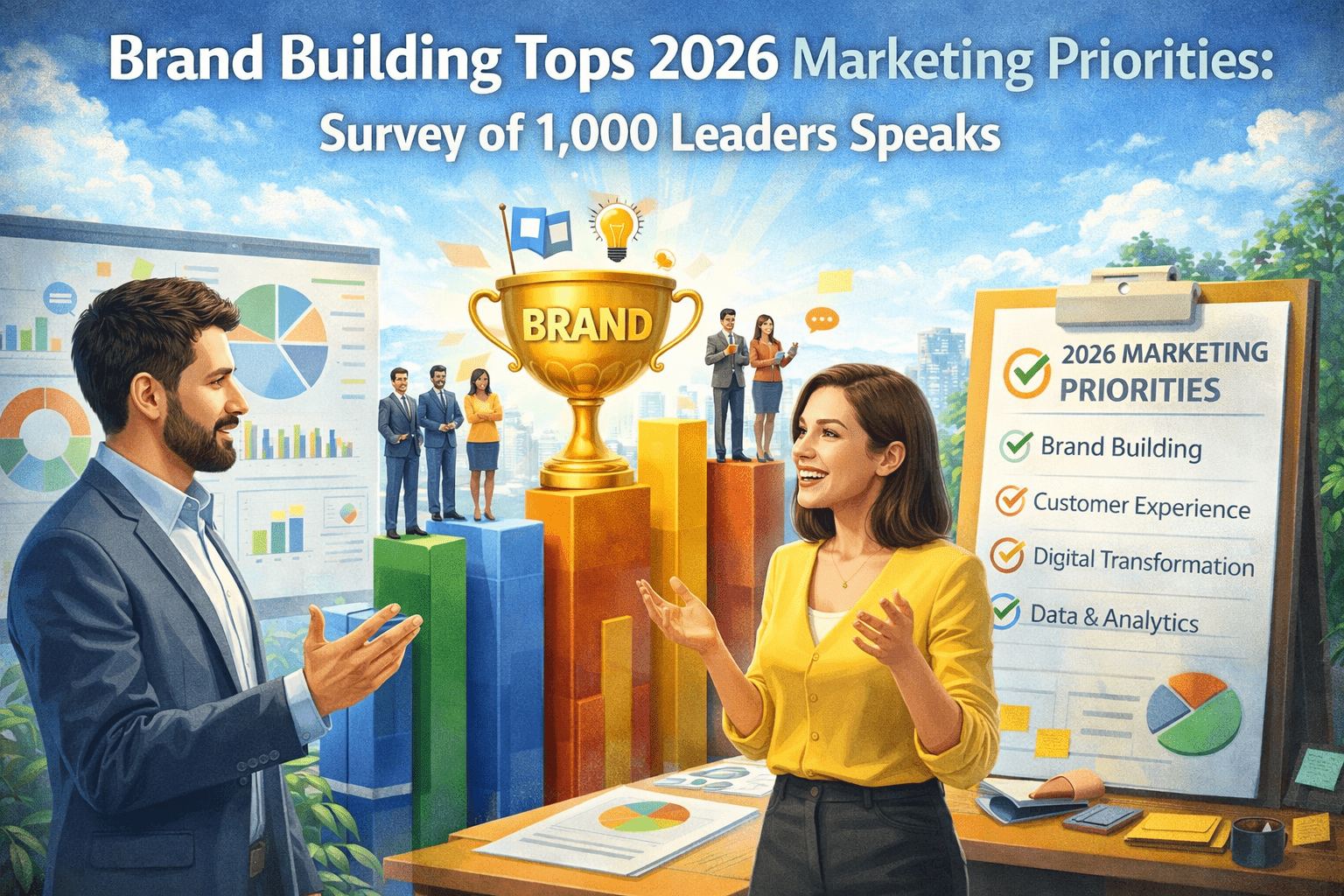
Every year, companies take a moment to rethink their strategies. What was successful last year? What failed? What’s next in the future? These are the kinds of questions that keep marketing departments and business executives awake at midnight. In 2026, the answers are becoming clearer due to a large-scale survey that collected insights from over 1,000 businesses in diverse sectors and sizes. The results, as shared in the report by Jeff Hirz, executive vice director of business development for OuterBox, provide an interesting picture of the direction businesses are heading. Brand building is now at the highest priority, and the motivations for this change tell us something about how the landscape of business is evolving.
The Survey That Got Everyone Talking
The research study, titled “2025 Performance Insights From 1000 Companies Planning for 2026,” was not just asking superficial questions. It examined how companies performed over the last year, what obstacles have slowed them down and what they intend to change in the coming year. The answers were from a range of companies, ranging from emerging startups to established midsize businesses to large corporations. The reason this data is so important is that it represents real-time decisions taken from real people, and does not reflect guidelines from textbooks or forecasts based on speculation. These are businesses that have already set budgets, altered prioritizations and made changes based on the lessons they have learned from the previous year.
Confidence Is Rising but Caution Has Not Left the Room
One of the more fascinating findings from the study is the state of mind among business leaders as they head into 2026. The confidence is increasing, but it’s not a reckless confidence. Businesses are more confident regarding their capacity to grow; they are also becoming more careful in the way they spend their funds and time. The days of throwing money at every new and exciting strategy or platform are fading away. Instead, companies are focusing on less significant, more efficient initiatives and ensuring that each dollar spent is linked to a measurable result. This cautious optimism suggests that the leaders have learned some difficult lessons from the years of fast change and uncertainty and are applying the lessons learned with rigor.
Brand Building Has Taken Centre Stage
Perhaps the most interesting finding in the entire study is the overwhelming emphasis placed on the creation of a brand. For a long time, performing marketing and tactics for short-term conversion were the most talked about topics. Companies poured their money into advertisements, retargeting campaigns and quick-win strategies to deliver immediate results. While these tactics are in use, the research has revealed a significant shift in how they think. Companies are now acknowledging that without a solid and trusted brand behind these campaigns, results are less likely to last as time passes.
Brand building is the process of establishing real trust and recognition with an audience. It’s about being the brand people first think of when they need a certain item or service. This is why someone prefers one brand over another, even if the costs are comparable. The research shows that top-performing teams fully understand this and are putting significant efforts into long-term brand development instead of only chasing immediate results.
Where Marketing Budgets Are Actually Going
The information also helps to determine which specific operational and marketing actions are being funded first. Creation of content SEO, content creation and improving customer experience are among the areas that are receiving more investments. Businesses are recognizing that creating a brand requires consistent and important communication with their target audience across various channels.
This is when strategies such as guest blogging services can become extremely useful. Writing thoughtful, well-written content on trusted external websites helps an organization gain credibility, gain new fans and establish the type of trust that search engines and actual people consider important. This isn’t an extravagant strategy, but it’s one that is able to grow over time and helps support the overall goals of branding that a lot of companies are currently focusing on.
However, there is a growing demand for content that is authentic and relatable, rather than artificial or too refined. In 2026, audiences are more savvy than ever before. They can tell the difference between generic and machine-generated content from a kilometer away and move right over it. The companies with the most engagement are those investing in content that sounded like it was composed by a real person with real experience and an unambiguous perspective.
AI Readiness Is a Work in Progress for Most Teams
The survey surveyed businesses on their ability to make use of artificial intelligence to boost growth, which was frank. A majority of businesses described themselves as “moderately prepared,” which is an acceptable way to say they are aware that AI is important, but haven’t yet figured out how to utilize it to its fullest potential. Certain teams are utilizing AI for simple tasks such as writing email subject lines and analyzing campaign data. It is not as common to integrate AI into their core marketing processes in a meaningful manner.
It is clear that the teams with the best performance do not have the greatest number of AI tools. They are those who have considered the areas in which AI can be of real value, as well as where human content and judgment result in better outcomes. Combining smart automated tasks for repetitive tasks, and real human creativeness in strategy, storytelling and building relationships appears to be the most effective combination for the remainder of 2026.
Customer Behavior Is Forcing Strategic Rethinks
Another main theme that is evident in the results of the survey is the impact of shifts in customer behavior and strategic choices. They’re looking at reviews, looking at options across various platforms and paying more for a brand’s value and its reputation. Purchases on impulse triggered through flashy ads are becoming less popular, particularly for purchases that are considered.
This is the reason why building brands has increased dramatically in importance. When consumers take longer to consider their options, those brands with established trust and credibility benefit from a significant advantage. A well-known, highly regarded brand is not required to compete to be noticed because it already has earned its place in the customer’s mind. Guest blogging plays an unassuming but significant function in this process, putting the brand’s voice and experience before new audiences well before they are willing to purchase.
The Takeaway Every Business Should Hear
The message coming from more than 1,000 companies is astonishingly constant. The growth in 2026 isn’t about making more. It’s focused on doing the right thing by focusing and executing with more discipline. Brand creation, authentic content written by humans, clever utilization of AI and the long-term sustainability of marketing investments are the core values that high-performing teams are building. Companies that embrace this philosophy and adhere to it for a long time will emerge victorious after the dust has settled.