The Quiet Panic Nobody’s Admitting Out Loud
Search has changed, and honestly, a lot of marketers are spooked. SparkToro’s 2024 study showed Google’s SGE pulling organic clicks down by close to 40%, and suddenly every LinkedIn thread is asking the same thing: are backlinks finally done? John Mueller from Google said pretty clearly back in 2023 that links are still a top-three ranking factor, so maybe pump the brakes on the funeral. Guest blogging services in India and link building firms are quietly rebuilding their playbooks while everyone else panics. Ahrefs data after the EEAT updates showed quality links boosting AI visibility by 25%. In fact, the answer is trickier than the news stories make it sound.
When Search Stopped Sending Traffic the Way It Used To
The search box talks back now. An AI text answers your question before you even touch your mouse. For educational questions, SEMrush tracked traffic dropped by 30% to 50% in Q1 2024. Advanced Web Ranking says that 65% of all searches were “zero-click.” Links look less visible on the surface, sure. But Moz’s 2024 research keeps pointing to the same thing: domain authority still decides which sources AI models trust enough to pull from. Over in India, Google Trends suggests roughly 70% of queries are now shaped by AI overviews. The traffic moved. The trust signals didn’t.
Backlinks Refuse to Die, and the Numbers Show Why
Here’s the part that frustrates the “SEO is dead” crowd: backlinks just keep working. Google Search Central confirmed it again in 2023, and an Ahrefs study covering more than a million keywords found a 0.72 correlation between quality dofollow links and rankings. That’s not a small number. AI engines lean toward sites with proper EEAT signals and topical clusters built around real subject expertise. SEMrush also found that sites with 50 or more DA50+ backlinks earn about twice the AI citations of weaker competitors. The front of search looks unrecognizable. The scoring system underneath? Pretty much the same demands, just stricter about what passes.
Why India’s Guest Posting Industry Is Still Pulling Its Weight
Guest blogging services in India keep delivering because they actually understand topical relevance, not just placement counts. Backlinko’s 2024 numbers point to a 20% average traffic lift from well-placed guest contributions. AI systems care about context more than ever, and guest posts landing on DR40+ domains genuinely help with entity recognition. A SEMrush survey of agencies found firms like FATJOE reporting 35% ROI gains after SGE rolled out. The ones still winning share the same habits: niche fit, editorial quality, and zero interest in spammy networks. The Indian agencies still pumping out garbage on irrelevant blogs are the ones loudly claiming link building is over. Funny how that works.
The New Playbook Smart Agencies Are Actually Running
When you look at link building firms today, they are very different from the list entry businesses of 10 years ago. Ahrefs says that resource-page marketing and skyscraper content make it 35% easier to keep links. This is important because Google is now doing more thorough checks of freshness. It is said by Moz that HARO and digital PR are about 25% more popular than listings because they connect placements to real news. Google’s Helpful Content Update in 2023 was blunt: relevance beats quantity. Period. And AI now flags private blog networks with about 95% accuracy. The shortcut era is genuinely finished, and the agencies still trying to fake it are getting caught faster every quarter.
Measuring Wins When the Dashboard Lies to You
ROI tracking has gotten weirder and more interesting at the same time. According to SEMrush, sponsored mentions—even those without links—increase sales by about 15% because they let both people and AI models know that your brand is present in the conversation. For strong link profiles, the rating connection is close to 0.6. Citations from ChatGPT and Perplexity show that AI is present, but Ahrefs and SEMrush are still doing most of the work. Backlinko’s 2024 data show that quality links have three times the return on investment of spam tactics. Indian companies also say that they keep 28% more customers when they stop offering volume packages. The metrics that matter today actually reflect brand health, not borrowed authority.
The Shift Underneath That Most People Are Missing
What’s really happening is a move from chasing rankings to earning recognition. AI doesn’t just rank pages anymore. It decides whether your brand deserves to be quoted, mentioned, or recommended inside a generated answer. The quality of websites that link back to you, brand mentions in reliable publications, author trustworthiness, and topic depth all play a role in this decision. Because AI models are trained to avoid sources with thin or misleading tracks, a disorganised backlink profile actually harms you in this situation. A brand consistently showing up across respected industry sites builds the kind of confidence AI engines surface without hesitation. Same game in spirit. Higher standards in practice.
What You Should Stop Doing Right Now
You’re going in the wrong direction if you’re still buying spots on networks of generic blogs, growing contact without considering theme suitability, or chasing Domain Authority numbers like a scoreboard. AI is more good at finding trends than any human reviewer. Today’s successful brands approach each link as a long-term image asset rather than a short ranking hack, build content that earns its placement, and invest in fewer, stronger ties with relevant publications. Quicker? Yes. However, it compounds in a way that spam has never done and never will.
So, Is It Still Worth It?
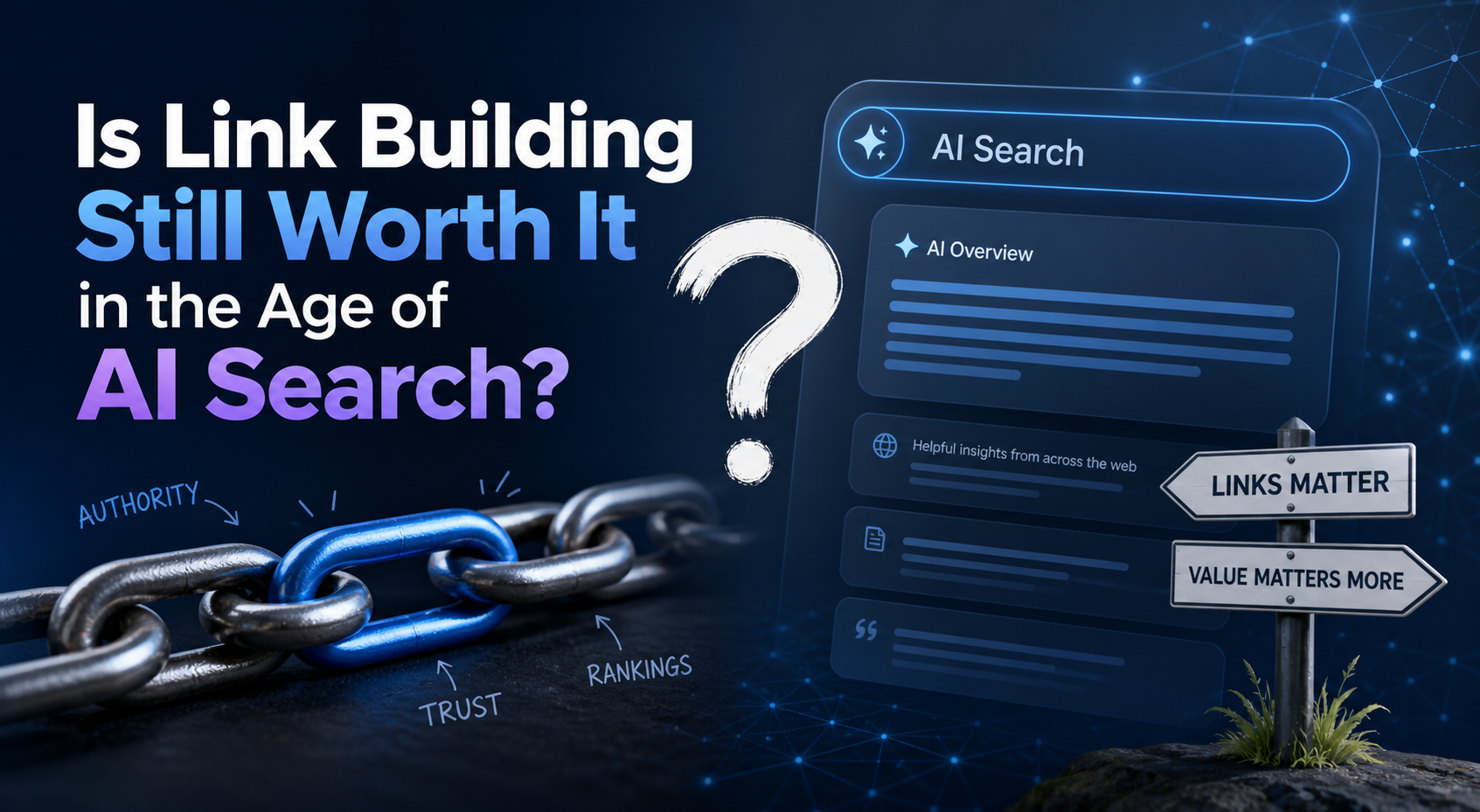
Link building isn’t dying. It just grew up while a lot of marketers weren’t paying attention. The tactics that worked in 2015 are liabilities now, but the underlying idea, which is earning authority through real signals, has only gotten more valuable. Guest blogging services in India and forward-thinking agencies are doing well right now precisely because they treat EEAT as a working framework instead of a buzzword. Even in AI-heavy SERPs, Ahrefs found that relevance-focused ads created ranking boosts of up to 40%. The result is rather straightforward: AI does not take the place of authority. It amplifies it. Build something real, and the algorithms will notice.