Nobody Talks About It, But Everyone Does It
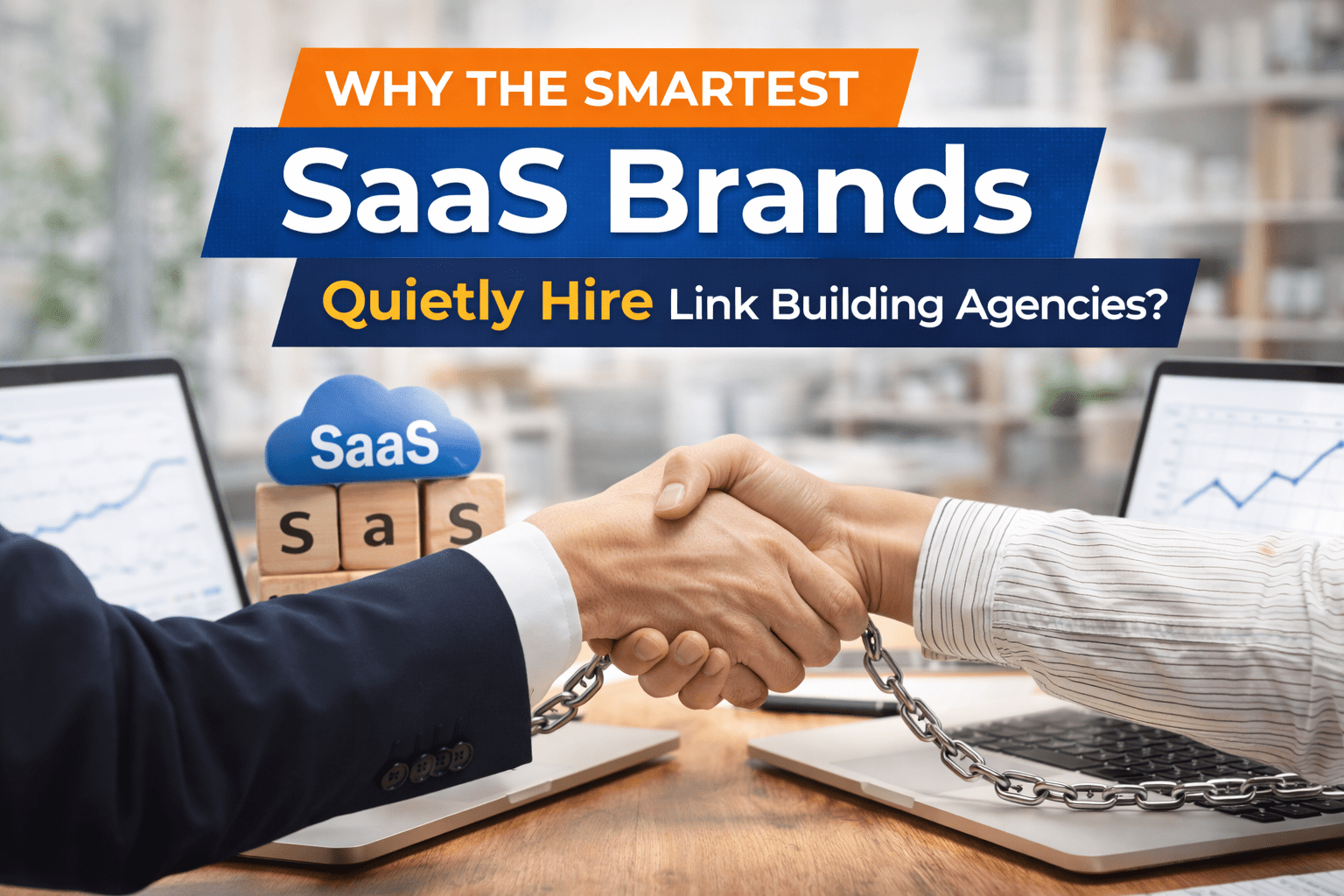
Here is something funny about the SaaS world. The companies that seem to effortlessly dominate Google search results? They are not doing it all by themselves. Behind the scenes, a surprising number of them have a specialised link building partner doing the heavy lifting. Not a flashy digital marketing agency that promises the moon. Not some freelancer picked off a job board. A proper, focused team that eats, sleeps and breathes backlinks for software companies. And the reason nobody brags about it is simple. What are you going to tell your adversaries regarding your secret weapon?
The Difference Between a Backlink That Helps and One That Hurts
Let’s get this clear. Backlinks do not all have to be the same. Not even close. Building genuine connections with websites that actually relate to your industry and speak to your target audience is what real link building looks like. When a SaaS brand gets this right, the payoff is massive. Better search rankings. Stronger domain authority. A reputation that search engines and real people both trust. But get it wrong? That is where things get ugly. Penalties from Google, a domain authority score that tanks overnight, visitors who bounce within seconds, and a brand image that takes months to repair. This is precisely why serious SaaS founders stop gambling and hand this work to a SaaS link building agency that has actually done this before and got the scars to prove it.
Brilliant Writers Still Need the Right Stage
Something that catches a lot of SaaS founders off guard is this. Having a great content team is wonderful, but it solves only half the puzzle. Picture it like having an incredible band but no venue to perform in. Many SaaS companies have skilled technical writers who can produce fantastic blog posts, detailed guides and product breakdowns. Brilliant. But figuring out which websites will accept a guest post, which editors actually respond to cold pitches, and which publications carry enough authority to move the SEO needle? That is a totally different game. Agencies that specialise in this space have spent years building relationships with B2B editors, tech review platforms and niche industry blogs. They already know who picks up the phone and who does not.
The “Expensive Link Equals Good Link” Trap
There is this belief floating around the SaaS world that refuses to die. People assume that if a backlink is pricey and comes from a website with a massive domain authority number, it must be gold. Well, not quite. An in-depth analysis of over 100 successful SaaS websites painted a very different picture. What determines if it is a backlink that moves the needle boils down to three things that are often overlooked. The name of the guest article as well as the anchor text used and the location of where the link appears within the post.
Google examines everything in deciding on the amount of weight it will give to a backlink. So a brand could spend hundreds of pounds on a single link from a site that has nothing to do with software, and it would barely make a dent. A good SaaS link building agency knows this instinctively. They chase relevance, not just big numbers on a screen.
Twelve Blunders That Keep SaaS Companies Stuck
When I looked through the backlink profiles of over 100 SaaS websites with tools such as Ahrefs, some very distinct patterns were discovered. The mistakes were shockingly frequent. Here are the twelve biggest blunders holding SaaS brands back from real growth.
- Chasing quantity and forgetting quality. Many link developers are of the opinion that flooding a site with hundreds of links can accelerate rankings. This isn’t the whole reality. If these links originate from unrelated, random websites they cause more harm than positive. Google is extremely concerned with the relevance of its sites, and those that disregard this rule are frequently disqualified. Even if penalties don’t take effect, traffic coming from unrelated links is rarely converted and just pushes bounce rates to the top of the heap.
- Picking guest post topics out of thin air. A lot of link builders grab whatever topic feels easiest and quickest to write about, without stopping to think whether it actually makes sense for the brand. There is a widespread belief that guest posts can help SEO whatever the subject. It isn’t true at all. If the subject has nothing to do with the product being advertised, the backlink that is created from it is of little credibility. It has low engagement, little SEO value, and has no impact on the brand’s visibility.
- Skipping the backlink acquisition plan entirely. Link building without a plan is akin to deciding to take the road without any map. Brands who fail to determine their preferred websites, types of content, and the most effective ways to reach out in advance, are wasting their time as well as money. Their efforts become scattered and disconnected from actual business goals. On the flip side, those who plan ahead use their resources wisely and see much stronger SEO results.
- Never deciding how many links a page actually needs. Some link builders just throw links at random pages without thinking about distribution. What happens next is predictable. Certain pages end up overloaded with backlinks while others get completely ignored. Pages drowning in links risk looking spammy to search engines. Pages starved of links never gain enough authority to rank. Neither situation helps the brand grow.
- Using whatever anchor text is lying around. Link builders focused purely on increasing link numbers tend to grab any anchor text without checking whether it aligns with target keywords or makes contextual sense. This can result in an unorganized backlink profile that isn’t relevant. Even more, it increases the possibility of being penalized by search engines. Strategic, thoughtful and diverse anchor text selections ensure that every link actually contributes to user engagement, rankings and brand visibility.
- Completely ignoring what competitors are doing. Only two types of link builders make this mistake. People who do not understand what is important to analyze competitors and those who believe in their own method that they do not need to be concerned. Both of these are risky. The competition within the SaaS space is getting more fierce each day. Only brands who research their competition and change accordingly are able to remain ahead.
- Dumping every link onto the homepage. Yes, the homepage is the face of any brand. But funnelling all backlinks there while ignoring service pages, feature pages, comparison articles and blog posts is a massive missed opportunity. These pages with smaller content often have greater conversion potential due to the fact that they are targeted at specific keywords that users are actively looking for. If only the homepage receives links both visitors and search engines alike begin to view the site with suspicion.
- Having no content strategy to back up link building. Link building and content are inextricably linked particularly in the SaaS area. Without a well-planned content strategy the brands are left out of visitors, engagement and conversion possibilities. Search engines give websites points for covering topics well and consistently. Companies that release content on a regular basis without any strategy undermine their authority on the topic and can damage even the links they achieve to establish.
- Forgetting to monitor and reclaim lost links. In the course of redesigns or migrations the URLs change and pages are removed. If redirects that are properly set up, created, the external backlinks are pointing to pages that are not working. The authority these links once had disappears. Brands who do not routinely search for and recover lost links slowly lose domain authority rankings, referral traffic, and rankings without even realizing it.
- Never building links with the brand name as anchor text. Backlinks that are brand-named appear authentic, trustworthy and natural for search engines. Yet many SaaS companies neglect them entirely. Without branded anchor text scattered throughout the backlink profile, the site ends up filled with only generic and keyword-heavy anchors. This creates an incomplete and unnatural-looking link profile that can hurt performance in brand-related searches.
- Ignoring unlinked brand mentions across the web. Sometimes, a publication or blog mentions an SaaS brand name, but doesn’t actually link to the site. Many link builders miss these opportunities since they’re focused on creating new links from the ground up. But claiming these unlinked mentions is one of the easiest wins in link building. Failing to do so means losing out on referral traffic and leaving brand trust and credibility on the table.
- Leaning too heavily on automation tools. Link building requires reaching out, prospecting, following-ups and monitoring. It’s an extremely time-consuming process. Automatization tools can be helpful in managing the work load and, in a large-scale market such as SaaS and cloud computing, they can be essential. However, overreliance on them snuffs off personalization and human connections. When all prospects receive the same cookie-cutter message the majority simply click delete. The outreach feels robotic, and link opportunities slip away.
Smart Guest Posting Is Not What Most People Think It Is
When people hear “guest posting” they usually think of uninformed articles packed with links to dodgy websites which no one ever is likely to read. And honestly, that reputation is somewhat deserved because a lot of agencies do exactly that. But proper guest blogging services look nothing like this. The ones that actually deliver results focus on placing thoughtful, well-researched articles on platforms where SaaS buyers and tech professionals actually spend their time.
Publications like G2, HackerNoon, ReadWrite and TechTarget carry real weight with both readers and search engines. And here is an interesting stat. Research shows that only around three per cent of bloggers publish more than 100 guest posts monthly. Just six per cent say most of their original content ends up as guest contributions elsewhere. That tells you something important. The marketplace isn’t as crowded as some people imagine. For companies that make a real effort instead of churning out garbage there is a wide opportunity.
Results Do Not Happen Overnight, But They Do Happen
It is not wise to promise a SaaS page-one ranking for a company within two weeks. This is untruthful. But what can happen is a pretty consistent pattern. The first month is when the best agencies focus on understanding the brand’s image by analyzing existing backlinks as well as mapping gaps in content and identifying the most promising opportunities for outreach.
The months two and three is when first guest blog posts or niche edits, as well as digital PR campaigns begin going live. Things start to change. Then from month four onwards, something genuinely exciting happens. Keyword rankings start climbing. Organic traffic picks up noticeably. Comparison articles and product pages start attracting the type of customers who register for demonstrations or begin trial trials for free. This builds over time; this is what makes it so effective. The patience of a patient person pays off and those brands who stick to it will reap the benefits.
The Quiet Edge That Competitors Cannot Figure Out
There is a reason the smartest SaaS brands keep this strategy under wraps. When rivals are left scratching their heads thinking about why a certain firm keeps showing on the first page of each relevant result on a search engine, this is a good thing because it’s an advantage. While those companies are continuously accumulating relevant backlinks, launching strategic guest posts on well-known platforms, and running targeted outreach campaigns which build credibility every week. It’s not an easy task. Nobody writes LinkedIn posts about it. It’s the type of work that differentiates businesses that are struggling on page five from those on page one. Once that gap is wide, it is impossible for any other company to bridge it.